
What is the NIST SP 800-207 Zero Trust Architecture Summary?
The NIST SP 800-207 Zero Trust Architecture summary defines Zero Trust (ZT) principles and a comprehensive Zero Trust Architecture (ZTA) for federal agencies and private organizations. This official publication shifts security away from implicit trust based on network location. It mandates continuous verification of every user, device, and application attempting to gain zero trust architecture access to resources.

I have witnessed firsthand the transformative power of this framework since its 2020 release. It fundamentally redefines what is zero trust architecture. My clients, particularly those in critical infrastructure, leverage this guidance to harden their enterprise cybersecurity defenses significantly.
Why is NIST SP 800-207 Crucial for Enterprise Cybersecurity?
NIST SP 800-207 is crucial because it provides a foundational, universally recognized framework for implementing Zero Trust principles across diverse enterprise environments. It eliminates the antiquated notion of a trusted internal zero trust network architecture perimeter. This publication mandates strict identity verification, device posture assessment, and least privilege access for every resource request, mitigating advanced threats.
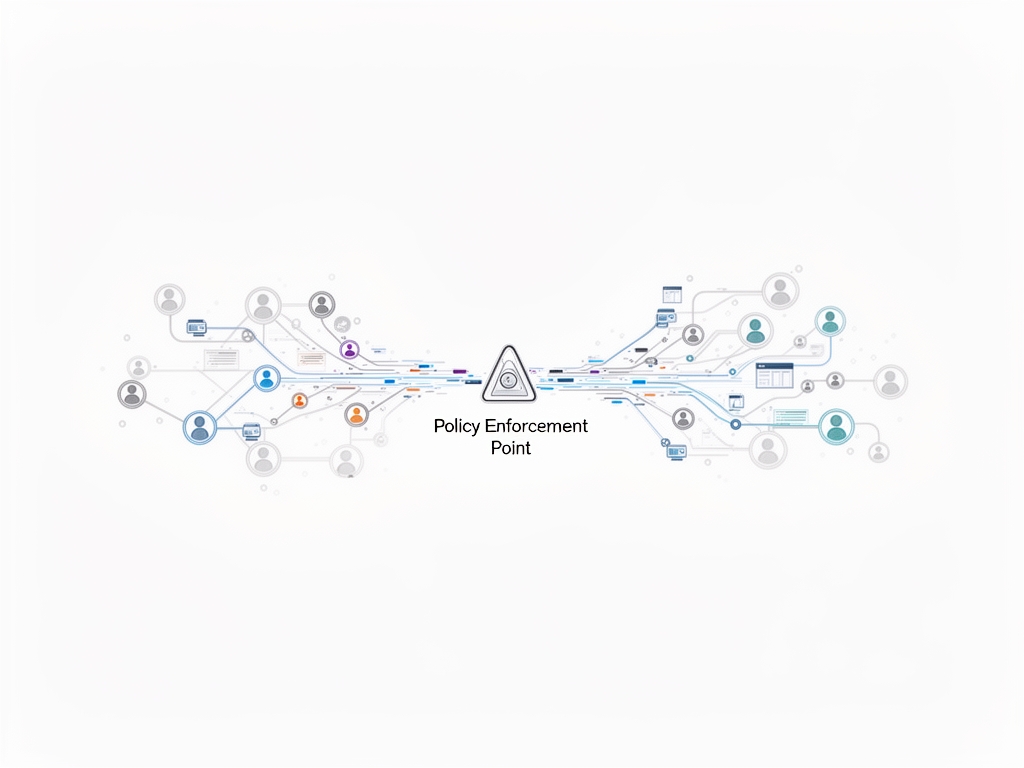
Traditional network security models, based on a perimeter defense, prove insufficient against modern attacks. Attackers bypass these defenses. My experience confirms that insider threats and sophisticated external actors exploit implicit trust within the network. NIST SP 800-207 addresses these vulnerabilities directly. It outlines a strategy where trust is never assumed. Every interaction requires verification. This protects critical data and systems. The guidance from federal zero trust architecture strategy documents frequently references this core NIST publication.
Implementing ZTA, as described in NIST SP 800-207 Zero Trust Architecture PDF 2020, creates a more resilient and secure operational posture. It defends against lateral movement attacks effectively. Organizations gain granular control over access to their assets, irrespective of user or device location. This is paramount for securing distributed workforces and cloud-based infrastructure. It shifts the defense focus from the network perimeter to individual resources.
Core Principles of NIST SP 800-207 Zero Trust Architecture
The NIST SP 800-207 Zero Trust Architecture summary identifies seven fundamental tenets that drive all ZTA implementations. These NIST SP 800-207 Zero Trust Architecture key principles enforce a rigorous security posture. They ensure continuous verification for every access request. This framework protects data and systems from evolving threats by eliminating implicit trust.
My clients and I always begin ZTA discussions by dissecting these tenets. They form the bedrock of any successful Zero Trust deployment. Understanding them is not merely academic; it is critical for strategic planning.
- All data sources and computing services are considered resources. The enterprise controls and protects all access to these resources. This applies whether they reside on-premises or in the cloud.
- All communication is secured regardless of network location. Network location no longer implies trust. Threats exist everywhere. This mandates strong authentication and encryption for all traffic. Encrypted traffic protects sensitive information during transit.
- Access to individual enterprise resources is granted on a per-session basis. Access decisions are dynamic. They are not static permissions. Each connection is evaluated independently.
- Access to resources is determined by policy, including observable state of user identity, application/service, and the requesting asset. Security posture continuously informs policy decisions. User device posture, identity, and environmental attributes dictate access.
- The enterprise monitors and measures the integrity and security posture of all owned and associated assets. Continuous monitoring identifies deviations or compromises. Organizations implement robust security controls.
- All resource authentication and authorization are dynamic and strictly enforced before access is granted. Trust is never implicit. Continuous authentication (MFA) and authorization occur. This applies even after initial access.
- The enterprise collects as much information as possible about the current state of assets, network infrastructure, and communications and uses it to improve its security posture. Telemetry data fuels real-time policy enforcement. Continuous monitoring and logging improve threat detection and response.
These principles guide every decision in zero trust architecture implementation. They mandate a proactive security stance. This ensures granular access control and continuous validation. Many organizations, including federal agencies, use these guidelines to secure their complex infrastructure.
Components and Implementation Strategies for NIST ZTA
The NIST SP 800-207 Zero Trust Architecture summary outlines critical components and strategic approaches for successful implementation. It details the Policy Enforcement Point (PEP) and Policy Decision Point (PDP). These elements work in concert to enforce access policies dynamically. The architecture demands a holistic enterprise-wide strategy for effective defense.
I find that understanding these specific components of zero trust architecture is essential for practical deployment. My clients often struggle with integrating disparate systems. NIST provides a roadmap.
The core components of a NIST-aligned ZTA include:
- Policy Enforcement Point (PEP): This system grants, denies, or revokes access to a resource. It includes client-side and resource-side components. The PEP enforces decisions from the Policy Decision Point.
- Policy Decision Point (PDP): This is the brain of the ZTA. It makes the final decision to grant or deny access based on enterprise policies and contextual attributes.
- Policy Engine: This component evaluates the enterprise access policy and the contextual attributes. It makes an authorize/deny decision for a session.
- Policy Administrator: This component creates and manages the enterprise’s access policies.
- Continuous Diagnostics and Mitigation (CDM) System: This system collects telemetry from devices and networks. It continuously monitors the security posture of assets.
- Threat Intelligence Feeds: These provide up-to-date information on known and emerging threats. They inform policy decisions.
- Security Information and Event Management (SIEM) System: This aggregates security logs. It facilitates monitoring and response.
- Identity Management System: This manages user identities and provides authentication services (e.g., MFA).
Implementing ZTA requires a phased approach. It is not an overnight task. My clients prioritize specific high-value assets first. Then they expand ZTA coverage incrementally. This practical how to implement zero trust architecture strategy minimizes disruption.
| Component | Primary Function | Relevance to Enterprise Security |
|---|---|---|
| Policy Decision Point (PDP) | Makes access decisions based on policies and context. | Central to dynamic, real-time access control; prevents unauthorized access. |
| Policy Enforcement Point (PEP) | Enforces PDP’s access decisions. | Guarantees policy application at the point of resource access; critical for network segmentation. |
| Identity Management System | Manages user identities and authentication. | Ensures only verified users attempt access; integrates MFA for high assurance. |
| Continuous Diagnostics and Mitigation (CDM) | Monitors security posture of devices/systems. | Provides real-time device health data; informs dynamic policy adjustments. |
| Threat Intelligence Feeds | Supplies current threat data. | Enhances proactive defense; enables rapid policy adaptation to new threats. |
This systematic approach to zero trust architecture strategy ensures comprehensive protection for your enterprise. It involves integrating multiple security technologies. Major players like Cloudflare Zero Trust Architecture and Zscaler Zero Trust Architecture offer solutions built on these principles.
Navigating NIST SP 800-207 Compliance and Best Practices
Achieving NIST SP 800-207 Zero Trust Architecture compliance necessitates a clear understanding of its guidelines and a commitment to continuous improvement. Organizations, especially government agencies, must align their cybersecurity practices with these federal standards. This demands diligent planning and persistent execution.
Compliance is not a checkbox exercise. It is a fundamental shift in security philosophy. My personal experience shows organizations often underestimate the cultural and operational changes required. This is especially true for those with deeply entrenched legacy systems.
Best practices for navigating NIST SP 800-207 compliance:
- Start with a comprehensive assessment: Understand your current security posture, existing access controls, and critical assets. Identify gaps against NIST ZTA principles.
- Develop a phased implementation plan: Prioritize high-risk areas. Implement ZTA incrementally. This reduces operational disruption.
- Invest in identity and access management (IAM): Strong identity verification and MFA are foundational. ROI of zero trust identity architecture proves the value of robust identity controls.
- Implement micro-segmentation: Segment your network into smaller, isolated zones. This limits lateral movement for attackers. Securing networks requires this granular approach.
- Adopt continuous monitoring: Employ CDM tools and SIEM systems. Continuously monitor user, device, and application behavior. This ensures ongoing security posture validation.
- Automate policy enforcement: Leverage security orchestration, automation, and response (SOAR) solutions. Automate responses to policy violations. This increases response speed and consistency.
- Train your workforce: Educate employees on ZTA principles and their role in maintaining security. Human error remains a significant risk.
- Regularly review and update policies: Cyber threats evolve. Your ZTA policies must adapt accordingly. NIST 800-207 provides a robust framework for this.
Many government entities, including CISA zero trust architecture initiatives and the DoD zero trust reference architecture pdf, heavily rely on NIST’s guidance. These frameworks provide concrete zero trust architecture example implementations. Adhering to these guidelines dramatically improves an enterprise’s overall cybersecurity resilience. You gain significantly improved control over access to critical resources and data. This proactive stance ensures your enterprise systems remain secure against evolving threats. Visit Asicybersecurity for more information.
FAQ
What is the primary goal of NIST SP 800-207 Zero Trust Architecture?
The primary goal of NIST SP 800-207 Zero Trust Architecture is to eliminate implicit trust within any network perimeter, regardless of location. It ensures every access request to an enterprise resource undergoes strict verification. This significantly reduces the attack surface and protects critical systems from compromise.
How does NIST ZTA differ from traditional perimeter security?
NIST ZTA radically differs from traditional perimeter security by assuming no implicit trust inside the network. Traditional models trust internal users and devices once past the perimeter. ZTA continuously verifies every user, device, and connection to every resource. This granular control defends against lateral movement attacks.
What are the key benefits of implementing zero trust architecture?
Implementing zero trust architecture provides numerous benefits of zero trust architecture. It reduces the attack surface, contains breaches by limiting lateral movement, enhances data protection, and improves compliance with regulations. Organizations gain superior visibility and control over their enterprise network access policies, improving overall security posture.
Related Articles
- Zero Trust Security Architecture
- NCSC Zero Trust Architecture Design Principles
- Best Zero Trust Solutions
nist sp 800-207 zero trust architecture summary – Quick Overview
| Attribute | Details |
|---|---|
| Topic | nist sp 800-207 zero trust architecture summary |
| Category | General |